
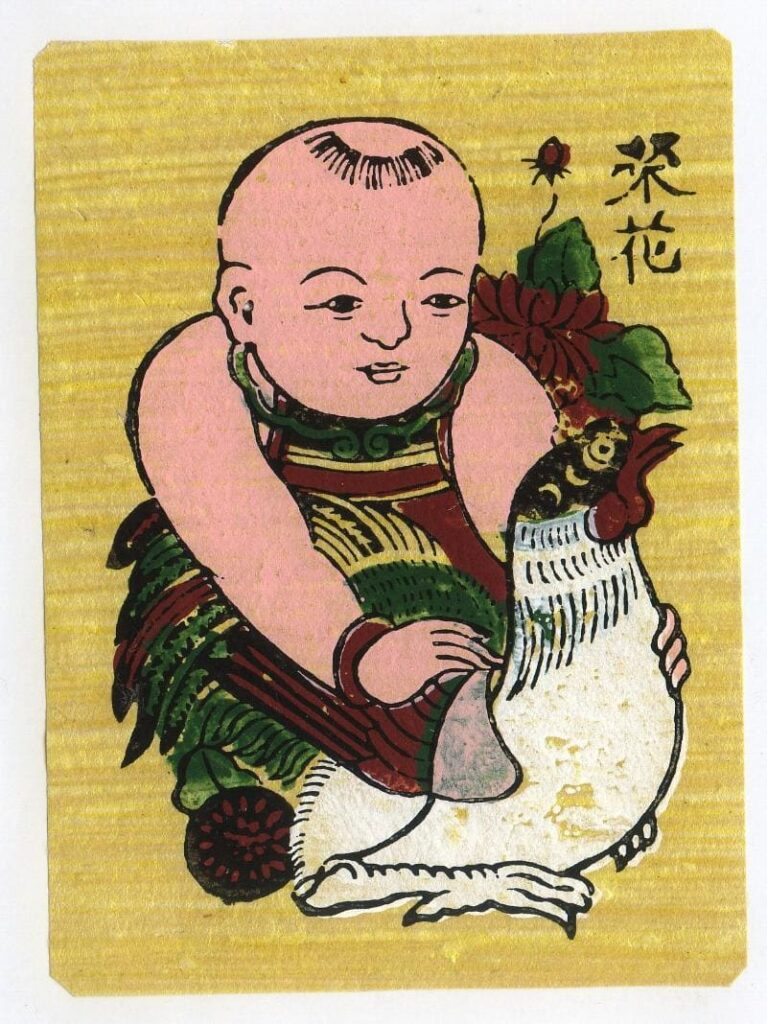
Dong Ho painting Baby Em Hugging Chicken is not only a familiar folk painting but also a symbol of warmth, luck and family bonding in Vietnamese culture. With the image of an innocent boy hugging a rooster, this work evokes childhood nostalgia and blessings for every family. In the modern age, when the hustle and bustle of life makes us forget traditional values, learning about Dong Ho painting Baby Em Hugging Chicken is a way to reconnect with the roots, bringing peace and prosperity. This article will lead you to explore in depth this Vietnam painting – from history to feng shui meaning, helping you not only understand but also know how to bring it into your living space.
What is Dong Ho Painting? – Folk Art of Dong Ho Painting Baby Holding Chicken
What is Dong Ho painting? This is a famous folk painting genre, representing the soul of Northern village art, recognized by UNESCO as an intangible cultural heritage in 2019. Originating from Dong Ho village, Thuan Thanh district, Bac Ninh province, Dong Ho painting is not only a handicraft product but also a living book telling stories about life, customs and folk philosophy.
Outstanding Features of Dong Ho Paintings
Dong Ho paintings stand out thanks to the sophisticated manual production process, using natural materials to create sustainable vitality. Let’s take a look at the factors that make this painting line attractive:
- Traditional Do paper: Made from Do tree bark, the paper is tough and absorbs color well, helping the painting keep its color for centuries without fading.
- Natural colors: From indigo leaves (green), charcoal (black), Sophora japonica flowers (yellow) to red powder (red) – all are taken from nature, safe and close.
- Simple, meaningful motifs: Rough lines but deep expression, often depicting rural life, festivals and people’s wishes.
With a history of more than 200 years, Dong Ho paintings used to be a popular “Tet newspaper”, hung at the beginning of the year to pray for peace. Today, it is not only a collectible treasure but also a bridge between generations, helping children understand their grandparents through realistic drawings.
The Role of Dong Ho Paintings in Vietnamese Culture
Dong Ho paintings do not stop at aesthetic value; they are a treasure trove of folk knowledge. Through themes such as “Picking Coconuts”, “Fighting Jealousy” or the Dong Ho painting of a Baby Holding a Chicken, we see the humor and optimism of the Vietnamese people in the face of difficulties. According to research by the Vietnam National Institute of Culture and Arts, this genre of paintings has influenced modern art, from silk paintings to graphic design. If you are looking to educate your children about heritage, starting with Dong Ho paintings is the perfect choice – both fun and meaningful.
The Origin of Dong Ho Painting of “Baby Holding a Chicken”: Journey From a Northern Village to a National Symbol
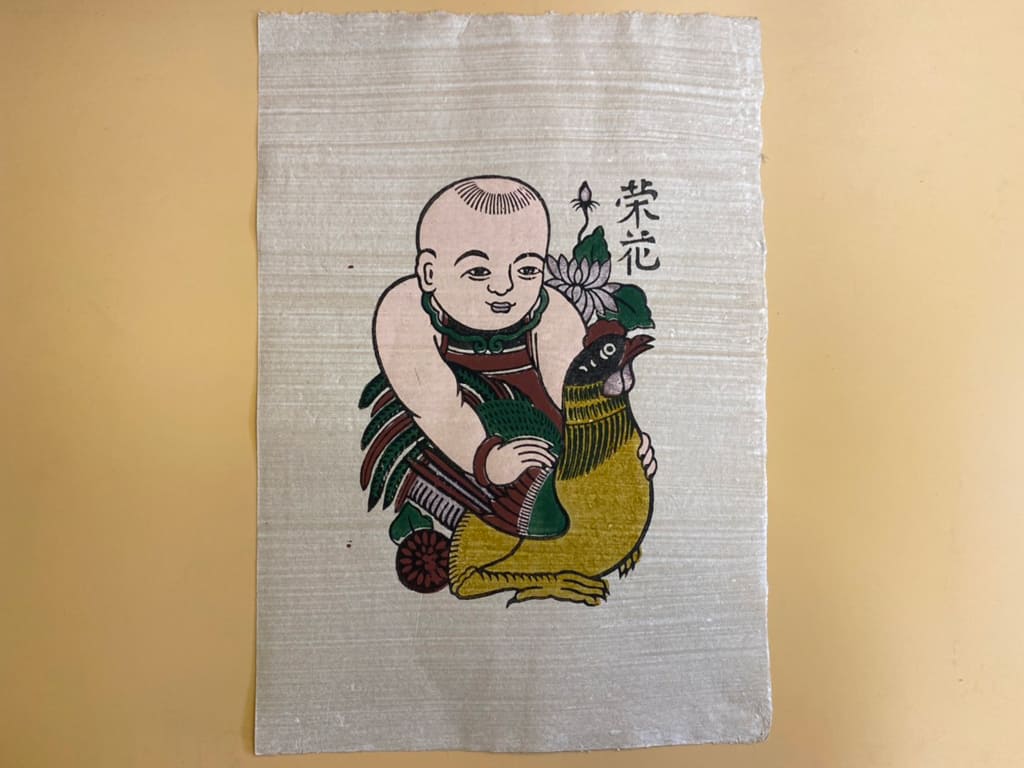
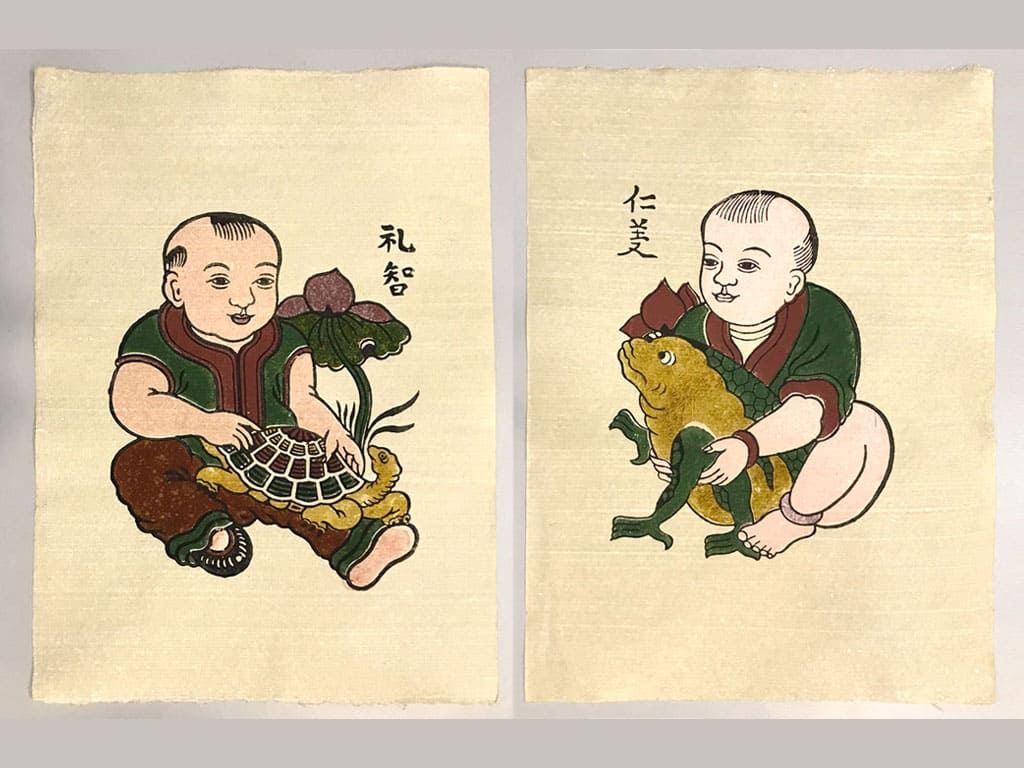
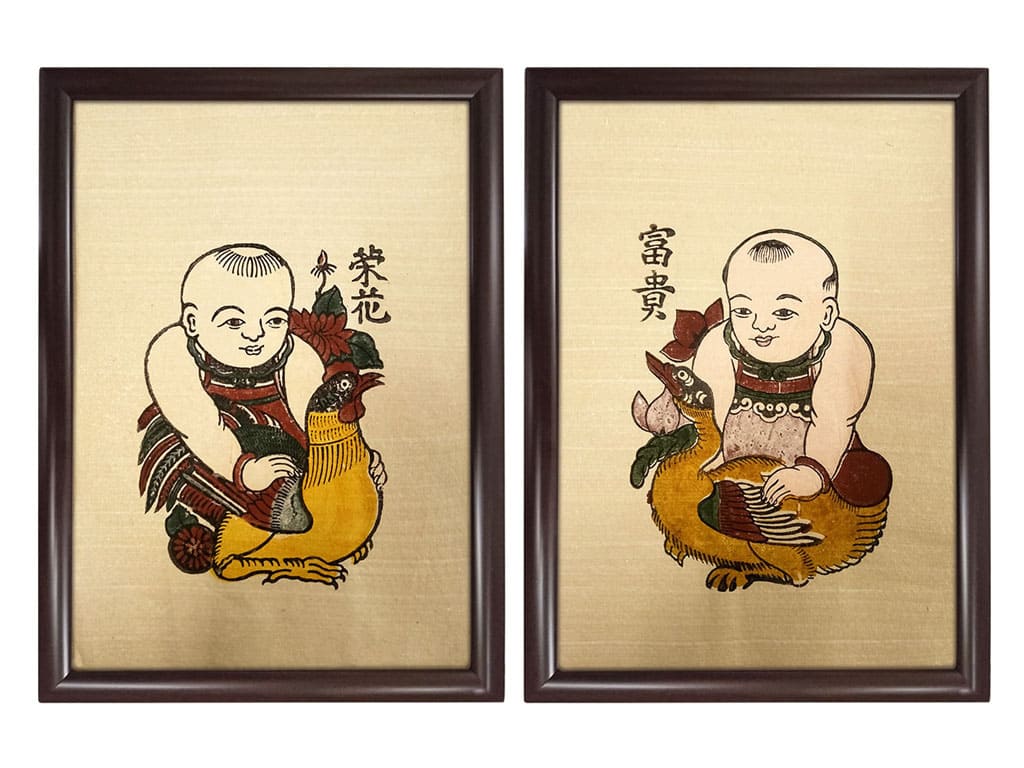
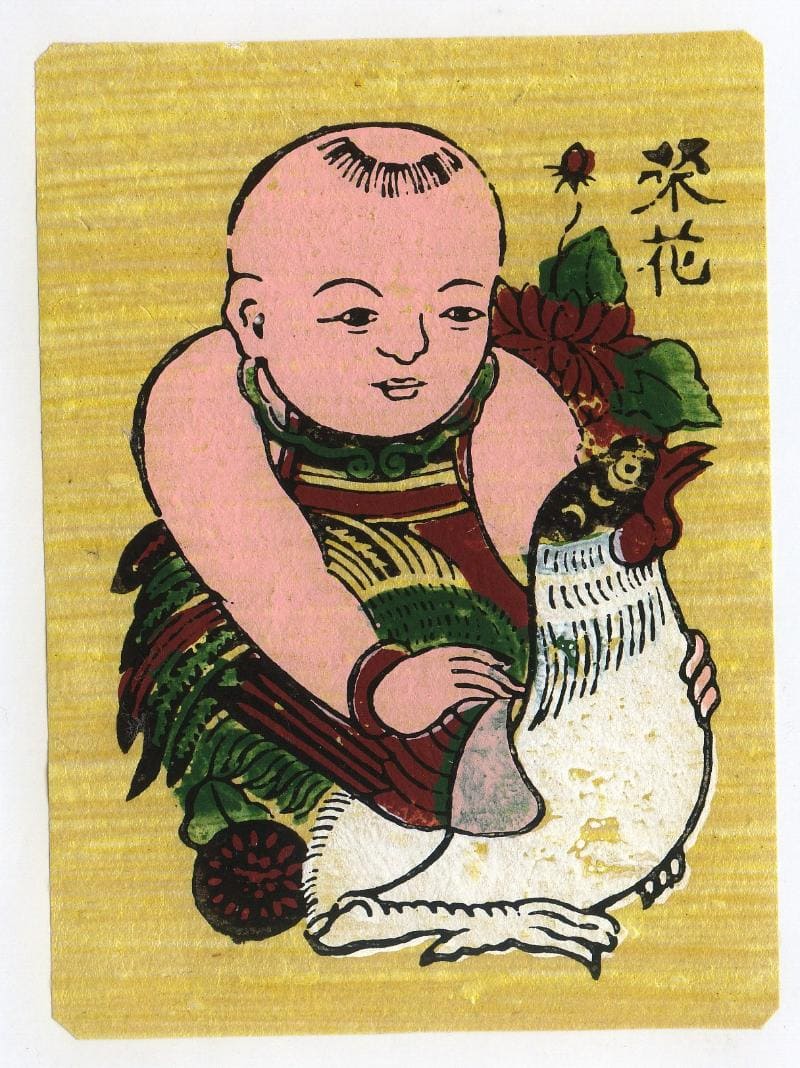
The origin of the Dong Ho painting “A Baby Holding a Chicken” dates back to the 18th and 19th centuries, when Dong Ho village was a bustling center of woodblock printing. This work belongs to the “Four Nobles” set of congratulatory paintings – Vinh Hoa (A Baby Holding a Chicken), Phu Quy (A Baby Holding a Duck), Le Tri (A Baby Holding a Turtle), Nhan Nghia (A Baby Holding a Toad) – symbolizing the four human virtues according to Confucianism.
History of Formation and Development
During the Le-Trinh period, Dong Ho artisans such as Nguyen Dang Che created the first woodblocks for the Dong Ho painting Em Be Em Ga. Initially, it was mass-produced for sale during Tet, costing only a few cents, but the meaning was priceless: the boy represented healthy children and grandchildren, the rooster brought “good luck” wishes.
- 19th century: The painting spread throughout the North, becoming an indispensable part of farmers’ homes.
- 20th century: Facing difficulties due to war, but was restored thanks to artisans such as Nguyen Huu Sam, who preserved the woodblock printing technique.
- Modern: In 2020, Dong Ho village invested in tourism, helping Dong Ho painting Em Be Em Ga reach the world through international exhibitions.
The origin of Dong Ho painting Em Be Em Ga is also linked to real life: village children often play with chickens and ducks, reflecting their attachment to nature. According to documents archived at the Vietnam Museum of Ethnology, the first painting was carved in 1820, with motifs inspired by cockfighting festivals – a symbol of strong vitality.
Cultural Influences from the Origin
From the origin of the Dong Ho painting Baby Holding a Chicken, we see the fusion of Confucianism and folk beliefs. The rooster is not only a domestic animal but also a messenger of dawn, driving away evil spirits. Nowadays, when tourism in Bac Ninh is booming, Dong Ho village welcomes thousands of visitors every year, turning this work into a cultural “magnet”.
Composition of Dong Ho Painting Baby Holding Chicken: Harmony Between Simplicity and Profoundness
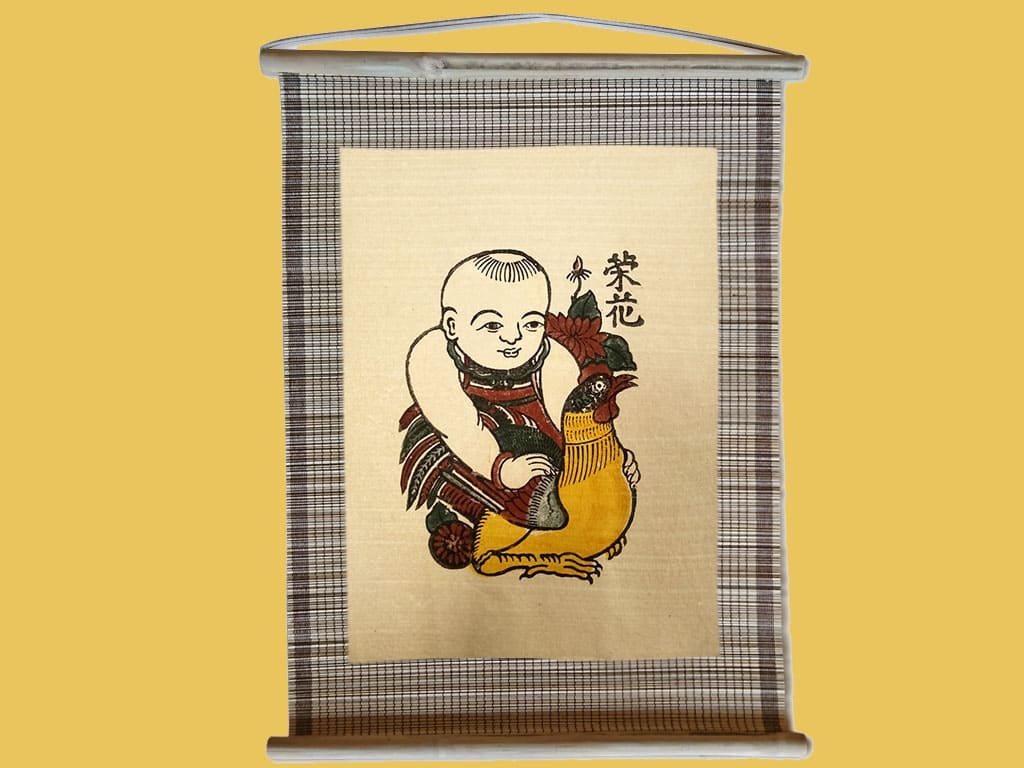
The layout of the Dong Ho painting Baby Em Om Ga is a testament to the arrangement talent of the folk artist: the center is the boy and the chicken, surrounded by supporting details to create depth. With a flat, non-perspective style, this layout creates a sense of closeness and accessibility.
Detailed Analysis of the Main Layout
In the center, a boy of about 5-7 years old is drawn hugging a rooster tightly, with a radiant face and simple clothes. The rooster – the main symbol – has a bright red crest and a wide tail, symbolizing vitality.
- Central part: The baby and the rooster occupy 60% of the space, with soft curved lines and prominent red-yellow colors.
- Background and accessories: Behind is a pot of blooming chrysanthemums (a symbol of longevity), fresh green leaves, creating a balance of yin and yang.
- Border: Usually has simple border motifs, such as vines or folk patterns, a limited frame without being restrictive.
The composition of the Dong Ho painting Baby Hugging a Rooster follows the principle of “three talents” (heaven-earth-human), with the rooster representing heaven, flowers and earth, and the baby – harmoniously like a blessing.
The Secret to Creating Attraction in Layout
The artist uses woodblock printing techniques to ensure sharp lines and natural color layers. The popular sizes are 26x37cm or 35x45cm, making it easy to hang on the wall. If you look closely, you will see the perfect symmetry: the baby on the left, the chicken on the right, the flowers balanced – creating a visual flow that leads the viewer’s eyes into the story.
Meaning of Dong Ho Painting of Baby Holding Chicken: Symbol of Glory, Luck and Family Peace
The meaning of the Dong Ho painting Baby Holding a Chicken goes beyond the cute image: it is a wish for prosperity, wealth and good health for children and grandchildren. According to feng shui, the painting carries strong positive energy, suitable for hanging in the living room or children’s room.
Layers of Deep Meaning
The painting Vinh Hoa Em Be Em Ga belongs to the four nobles, with the rooster (chicken) having the same sound as “cat” – great luck. The boy holding the chicken symbolizes holding blessings, the chrysanthemum behind adds the meaning of longevity.
- Feng shui of Em Be Em Ga painting: Southeast direction to activate wealth, dispel negative energy.
- Family values: Expressing love, wishing children to be obedient and successful – ideal for birthdays or housewarming gifts.
- Folk spirituality: The chicken represents the five Confucian virtues (Humanity – Righteousness – Propriety – Wisdom – Trustworthiness), chrysanthemums wish for longevity.
In a modern context, the meaning of the Dong Ho painting Em Be Em Ga is also a reminder to live simply and cherish nature. Feng shui experts such as Mr. Nguyen Vu Tuan Anh emphasize: “Hanging this painting will make the family more prosperous, and the children will have more prosperity.”
Meaningful Applications in Life
Many families hang Dong Ho paintings of a Baby Holding a Chicken during Tet to welcome a smooth new year. According to a survey by the Vietnam Fine Arts Association, 70% of people who buy folk paintings choose this theme because of its educational value – teaching children about kindness through funny images.
How to Draw Dong Ho Painting Baby Holding Chicken: Craft Guide for Beginners
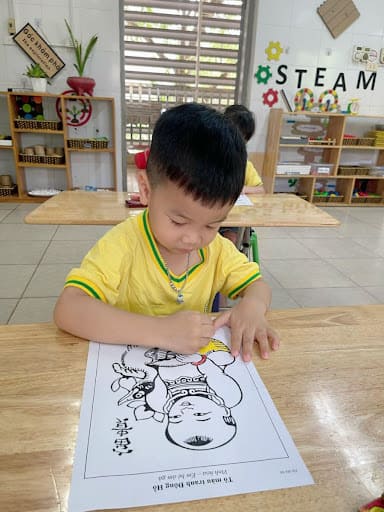
How to draw Dong Ho Baby Holding Chicken painting requires patience, but anyone can try to feel the heritage. Here is the basic process to get you started.
Basic Drawing Steps
- Prepare materials: Do paper, woodblocks (or hand-painted), natural colors from herbs.
- Woodblock carving: Use a knife to carve baby, chicken, flower motifs – focus on simple lines.
- Print and color: Print black lines first, then layer red for chicken, yellow for flower.
- Finishing: Cover with natural varnish to protect, let dry for 24 hours.
Tips for beginners: Start with a sketch pencil, use watercolor instead if you don’t have herbs.
Benefits of learning to draw: Not only creative but also meditative, stress-reducing – like classes in Dong Ho village.
Through the way of drawing Dong Ho Baby Holding Chicken painting, you will understand why ancient artisans called this “living painting” – each stroke is a story.
Feng Shui Painting of Baby Holding Chicken: The Secret to Hanging It to Attract Wealth and Happiness
Feng Shui Baby Holding Chicken painting is the factor that makes this work “hot” in interior decoration. With positive energy from images of children and animals, the painting helps balance the air, especially for homes with small children.
Ideal Hanging Position and Notes
- Living room: East direction, 1.5m high from the floor to activate prosperity.
- Children’s bedroom: Hang at the head of the bed, combine with warm lights to increase intimacy.
- Avoid location: Do not hang opposite a mirror or toilet to avoid dispersing energy.
According to the book “Vietnamese Folk Feng Shui” by Professor Tran Quoc Vuong, the painting Vinh Hoa Em Be Em Ga combined with green plants will double luck. Today, the modern version printed on canvas makes it easy to integrate into urban homes.
Practical Feng Shui Benefits
Many homeowners share: After hanging, work goes more smoothly, children study well. That is the power of heritage – not superstition but based on natural harmony.
Application of Dong Ho Painting of Baby Holding Chicken in Modern Decoration
The Dong Ho painting of a baby hugging a chicken is not just for old houses; it easily blends in with minimalist or Scandinavian styles. From modern glass frames to 3D printing, this work is “transforming” in interior design.
Unique Decorating Ideas
- Wall Collection: Combine with Phu Quy to create a pair of paintings that balance yin and yang.
- Personalized Gift: Print family names on the border, give on weddings or the birth of a child.
- Workspace: Hang small to inspire creativity, especially for home-based offices.
- Color Combination: Place next to white furniture to highlight the traditional red-yellow tones.
- Contemporary Version: Young artists like Nguyen Thanh Binh have recreated the painting with acrylic, keeping the soul but adding depth.
With flexible application, Dong Ho Baby Holding Chicken painting helps the living space become more cultural without going out of style.
Preserving Dong Ho Painting of Baby Holding Chicken for Long Term
To keep your Dong Ho painting of a baby hugging a chicken looking fresh, proper preservation is key. From keeping it out of direct sunlight to checking it regularly, these tips will help you preserve your treasure for generations to come.
Detailed Storage Instructions
- Environment: Keep at 20-25°C, 50-60% humidity, away from dust and smoke.
- Cleaning: Use a soft, dry cloth to wipe gently, avoid water.
- Storage: Roll the Do paper if not hanging, place a desiccant bag.
According to instructions from the Bac Ninh Monuments Conservation Center, 80% of paintings are damaged by mold – so quarterly inspection is necessary.
At the end of the journey of discovery, the Dong Ho painting of a Baby Holding a Chicken is not only a painting but also a reminder of the simple beauty of life. Try owning one to feel the luck spreading – you will be surprised by the power of Vietnamese heritage!

